
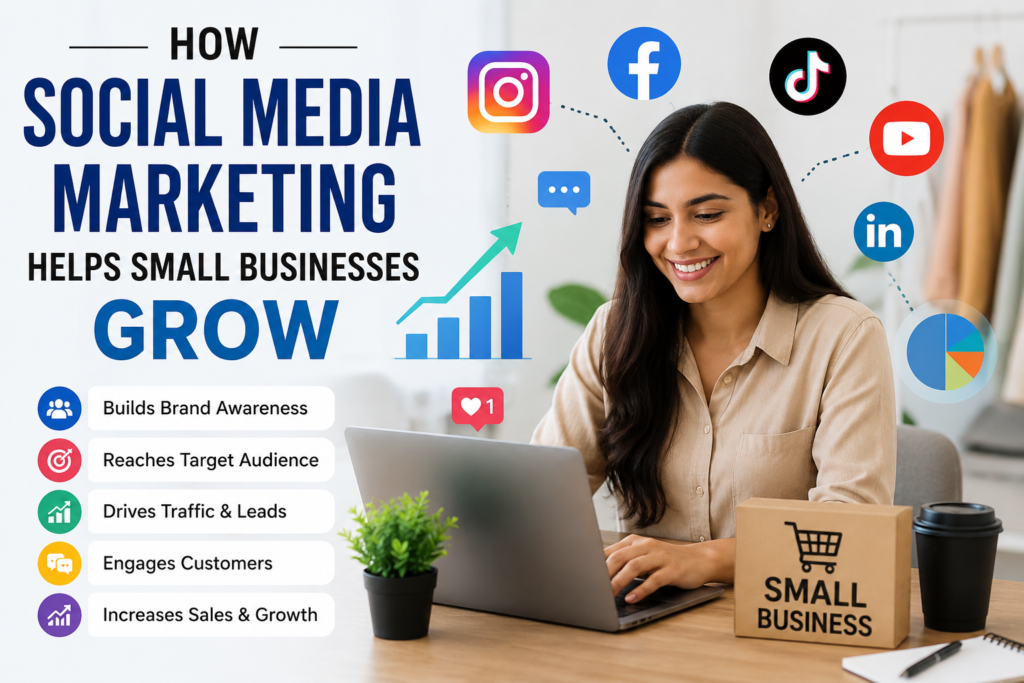
Social Media Marketing for Small Businesses: Proven Strategies for Success
Social Media Marketing for Small Businesses: Complete Guide to Growing Your Business In today’s digital world, having a strong online presence is no longer optional for small businesses. Customers are spending more time on platforms like Instagram, Facebook, LinkedIn, and YouTube to discover products, compare brands, read reviews, and make buying decisions. This is where Social Media Marketing for Small Businesses becomes important. Social media gives small businesses an opportunity to reach potential customers, build brand awareness, generate leads, and create long-term relationships without requiring a huge marketing budget. Whether you run a local shop, startup, online store, service business, or personal brand, the right Social Media Marketing for Small Businesses strategy can help you compete with larger companies. For businesses looking to build a complete online presence, you can also explore digital marketing services at RahulBrandHub. What Is Social Media Marketing? Social media marketing is the process of promoting a business, product, service, or brand through social media platforms. It involves creating useful content, interacting with audiences, promoting products, running advertisements, and analyzing performance. Popular platforms include: Instagram Facebook YouTube LinkedIn Pinterest X WhatsApp The goal is not simply to post content every day. Effective social media marketing focuses on reaching the right audience with the right message at the right time. For small businesses, Social Media Marketing for Small Businesses can be a powerful way to increase visibility and attract potential customers. Businesses can also learn more about social media advertising and business tools through Meta for Business. Why Is Social Media Marketing Important for Small Businesses? Large companies often have significant advertising budgets, but small businesses may have limited resources. Social media helps reduce this gap by providing affordable ways to reach targeted audiences. A small business can create a business profile, publish valuable content, communicate with customers, and build a community around its brand. This makes Social Media Marketing for Small Businesses an accessible marketing strategy for startups, local businesses, and growing companies. Here are some of the major benefits. 7 Benefits of Social Media Marketing for Small Businesses 1. Builds Brand Awareness One of the biggest advantages of social media is increased brand visibility. When people regularly see your business name, logo, products, videos, or useful content, they gradually become familiar with your brand. For example, a local café can post: Food photographs Short videos Customer reviews Behind-the-scenes content Special offers New menu announcements Consistent content can help people remember the business when they are ready to purchase. A consistent Social Media Marketing for Small Businesses strategy can therefore help create stronger brand recognition over time. 2. Helps Reach the Right Audience Social media platforms provide businesses with powerful targeting options. Instead of showing advertisements to everyone, businesses can target audiences based on factors such as interests, age, location, behavior, and other characteristics supported by the platform. For example, a Jaipur-based fitness studio could focus its social media advertising on people interested in fitness and located within its service area. This makes small business social media marketing more focused and potentially more cost-effective than traditional advertising. Businesses can explore Meta Business resources to learn more about advertising and audience management. 3. Increases Website Traffic Social media can also become an important source of website visitors. Businesses can share: Blog posts Product pages Service pages Offers Landing pages Educational content For example, if a digital marketing company publishes a blog about SEO, it can share that article on LinkedIn, Facebook, and Instagram. Interested users may click the link and visit the website to learn more about the company. A strong combination of Social Media Marketing for Small Businesses and SEO can therefore support overall digital marketing growth. You can also learn more about SEO through Google Search Central, Google’s official resource for website owners and SEO professionals. 4. Generates Leads and Customers Social media is not only about likes and followers. When used correctly, it can generate real business opportunities. Businesses can use social media to encourage customers to: Send a direct message Fill out a contact form Visit a website Request a quotation Book a service Purchase a product Contact the business through WhatsApp For example, a photography business can post its previous work and add a clear call-to-action such as “DM us for bookings.” This can turn social media attention into potential leads. A well-planned Social Media Marketing for Small Businesses campaign should focus on meaningful actions such as enquiries, leads, and sales rather than only follower growth. 5. Builds Customer Relationships Customers want to interact with brands that feel approachable and responsive. Social media provides businesses with a direct communication channel. Customers can ask questions, share feedback, comment on posts, and send messages. Businesses can use these interactions to understand customer needs better. Responding to comments and messages quickly can also improve customer experience and help build trust. This relationship-building aspect is one of the most valuable parts of Social Media Marketing for Small Businesses. 6. Provides Affordable Marketing Opportunities Traditional advertising can sometimes be expensive for small businesses. Social media offers several low-cost marketing opportunities. Businesses can start with organic content and gradually invest in paid advertising when they understand what works. A small business does not necessarily need a huge budget to begin. What matters more is: Consistency Useful content Audience understanding Creativity Clear goals Performance tracking This makes Social Media Marketing for Small Businesses accessible to startups and small businesses. 7. Helps Businesses Understand Customers Social media analytics can provide useful information about audience behavior. Businesses can learn: Which posts receive more engagement Which videos people watch longer What content generates clicks When audiences are most active Which products receive more attention These insights can help businesses improve future marketing campaigns. Instead of guessing what customers want, businesses can use data and feedback to make better marketing decisions. This data-driven approach can make Social Media Marketing for Small Businesses more effective over time. How to Create a Social Media Marketing Strategy for a Small Business Having social media accounts
