
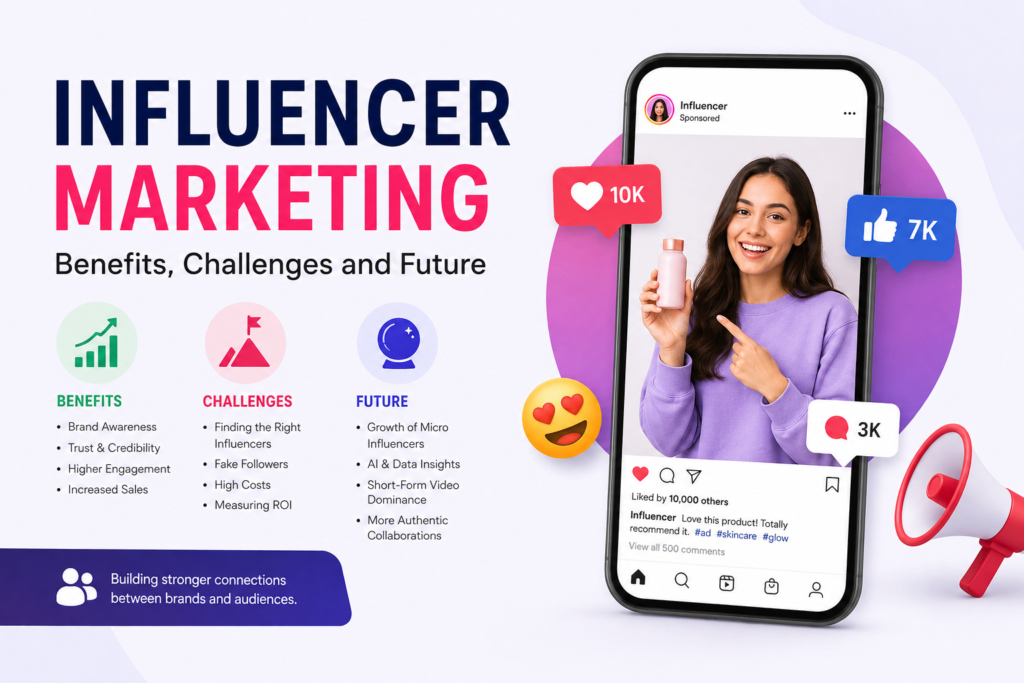
Influencer Marketing in 2026: Benefits, Challenges and Future Trends
Influencer Marketing: Benefits, Challenges and Future Social media has changed the way people discover brands, products, and services. Today, customers often look beyond traditional advertisements and pay attention to recommendations from creators and influencers they trust. This shift has made Influencer Marketing an important part of modern digital marketing. From small businesses to large brands, companies are collaborating with influencers to increase brand awareness, reach specific audiences, and build stronger customer relationships. Influencer marketing is no longer limited to celebrities. Micro-influencers, niche creators, and content creators can also help businesses connect with highly relevant audiences. In this article, we will explore what influencer marketing is, its major benefits and challenges, effective influencer marketing strategies, current trends, and the future of influencer marketing. What Is Influencer Marketing? Influencer marketing is a marketing strategy in which businesses collaborate with individuals who have an established audience and influence on social media or other digital platforms. Influencers create content around products, services, or brands and share it with their followers. Depending on the campaign, the content may include: Instagram posts and Reels YouTube videos Product reviews Tutorials Sponsored content Stories Short-form videos Blog articles Live streams The main goal is to use the creator’s audience and credibility to introduce a brand to potential customers. For example, a fitness brand may work with a fitness creator to demonstrate its products. Instead of seeing a traditional advertisement, the audience sees the product being used in a relevant and familiar context. Why Is Influencer Marketing Important? Consumers are exposed to a large number of advertisements every day. Because of this, traditional advertising can sometimes struggle to capture attention. Influencers can make brand communication feel more personal and relatable. Their followers may already be interested in a particular niche, such as: Fashion Fitness Technology Travel Food Education Beauty Finance Gaming This makes influencer marketing especially useful when a business wants to reach a specific audience. For businesses that want to combine influencer campaigns with other online strategies, digital marketing services from RahulBrandHub can also be explored as part of a broader digital marketing strategy. Benefits of Influencer Marketing 1. Increases Brand Awareness One of the biggest benefits of influencer marketing is increased brand visibility. When an influencer introduces a product to their audience, the brand can reach people who may not have discovered it through traditional advertising. For small businesses and startups, this can be particularly valuable because influencer collaborations can help introduce a new brand to a targeted community. 2. Builds Trust and Credibility People often trust recommendations from creators they regularly follow. When an influencer genuinely explains how a product works or shares their experience, the content may feel more authentic than a traditional advertisement. However, transparency is important. Sponsored partnerships should be clearly disclosed so that audiences understand the commercial relationship. Businesses and creators can review the FTC’s guidance for social media influencers to understand key principles around sponsorship disclosures. 3. Reaches Targeted Audiences Influencer marketing allows businesses to choose creators based on their niche and audience. For example, a skincare company can collaborate with skincare creators instead of targeting a completely general audience. This makes campaigns more relevant and can improve the chances of reaching potential customers. 4. Generates Engaging Content Influencers are experienced at creating content for their audiences. A collaboration can generate useful marketing assets such as: Product demonstrations Reviews Tutorials Reels Short videos Testimonials Lifestyle photographs Businesses may also be able to repurpose suitable creator content across their own marketing channels, subject to agreed usage rights. A strong social media marketing strategy can help businesses use this type of creator content alongside their wider social media activities. 5. Supports Sales and Lead Generation Influencer campaigns can also contribute to business conversions. Brands can use methods such as: Discount codes Affiliate links Product links Landing pages Promotional offers Lead forms Tracking these activities helps businesses understand whether an influencer campaign is generating measurable results. Challenges of Influencer Marketing Although influencer marketing has many advantages, it also comes with challenges. 1. Choosing the Right Influencer Having a large number of followers does not automatically mean an influencer is suitable for a campaign. Businesses should consider: Audience relevance Engagement quality Content style Audience demographics Previous brand collaborations Reputation Content quality A smaller creator with a highly relevant audience may sometimes be more useful than a celebrity with millions of unrelated followers. 2. Fake Followers and Engagement Fake followers and artificial engagement can create problems for brands. A business may believe it is reaching a large audience when many accounts are inactive, automated, or irrelevant. Before starting a partnership, businesses should review audience quality and campaign performance rather than focusing only on follower numbers. 3. High Collaboration Costs Influencer fees vary significantly. Celebrity and large creators can charge substantial amounts, while micro-influencers and niche creators may offer more accessible collaboration opportunities. Businesses should set a clear budget and compare expected results with campaign costs. 4. Measuring ROI Measuring the return on investment of influencer marketing can sometimes be difficult. Likes and views provide useful information, but businesses should also consider deeper metrics such as: Website traffic Leads Sales Affiliate conversions Engagement rate Cost per acquisition Brand searches Businesses can use Google Analytics campaign and traffic-source reports to understand how visitors arrive at a website and evaluate traffic from different marketing sources. 5. Maintaining Brand Consistency Influencers have their own personality and creative style. Businesses need to provide clear campaign guidelines while allowing creators enough freedom to produce content that feels natural to their audience. A good influencer marketing strategy should balance brand requirements with creator authenticity. How to Create an Effective Influencer Marketing Strategy Step 1: Define Your Goal Before contacting influencers, decide what you want to achieve. Your goal could be: Brand awareness Website traffic Product sales Lead generation App downloads Social media growth Product launches A clear goal makes campaign planning and measurement easier. Step 2: Identify Your Target Audience Understand who you want to reach. Consider factors such as age, location,
